











The Game Awards, held annually, has evolved into a significant marketing platform for gaming titles, enhancing audience anticipation for newly announced games. In the wake of this year’s event, attention has turned to the Steam followers of fresh reveals, with particular emphasis on the impact of the awards on sales and engagement.
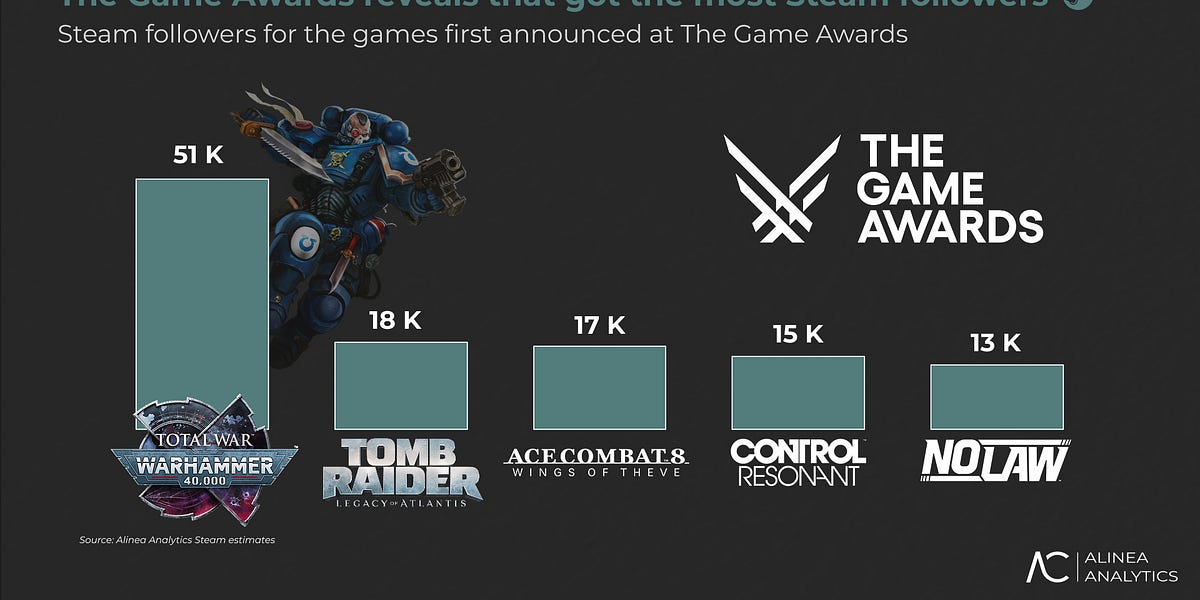
Among the standout titles, Total War: Warhammer 40,000 led the pack, amassing an impressive 51,000 new Steam followers following its cinematic reveal. This surge highlights the potent combination of Creative Assembly’s grand strategy expertise and the beloved Warhammer 40K franchise, which has a massive fan base both within and outside gaming. The game has also garnered the highest wishlist numbers among new reveals, indicating strong resonance with Warhammer enthusiasts. Interestingly, nearly 58% of wishlisters have played Vermintide 2, while crossover with non-Warhammer Total War titles remains below 30%.
Another notable reveal, Tomb Raider: Legacy of Atlantis, attracted 18,000 new followers, underscoring the lasting appeal of the Tomb Raider brand. While this figure signifies strong initial interest, the challenge for publisher Amazon is converting nostalgic sentiments into modern gameplay engagement. Data suggests that over half of the wishlisters played the 2013 Tomb Raider reboot, indicating a solid core audience. Nevertheless, winning over a broader audience remains a crucial hurdle, although developer Crystal Dynamics has a track record of delivering quality titles.
Ace Combat 8: Wings of Theve launched with 17,000 followers, tapping into a loyal fanbase eager for a new installment after a seven-year hiatus since Ace Combat 7. This upcoming title is poised to achieve modest financial success upon its 2026 release, buoyed by premium pricing and strong engagement within its demographic. Over 54% of wishlisters have previously played Ace Combat 7, showcasing the series’ sustained popularity.
Control Resonant gained 15,000 new followers, fueled by Remedy Entertainment’s reputation for innovative action and storytelling. The first Control’s critical acclaim and unique aesthetic continue to attract a dedicated audience, particularly among PC gamers who appreciate high-end graphics. The title is set to build on the franchise’s established following, despite recent challenges faced by Remedy’s Alan Wake 2, which did not launch on Steam.
The only new intellectual property among the top five, No Law, developed by Neon Giant and published by Krafton, garnered 13,000 followers. Set in a cybergrunge metropolis, the game promises a blend of chaotic combat and player agency, appealing to fans of immersive simulations. Notably, 60% of its wishlisters have played Cyberpunk 2077, indicating a potential crossover audience.
Following the event, Expedition 33 emerged as a dominant force, securing nine awards, including the coveted Game of the Year title. This recognition translated into immediate commercial success, with the game selling over 200,000 copies since the awards ceremony. Approximately 76% of these sales came from Steam, revealing a stark contrast in performance across platforms; only about 3% of sales originated from Xbox, despite a significant uptick in Game Pass engagement. With over 52,000 Xbox users accessing the game via the subscription service for the first time, the data suggests a substantial cannibalization of premium sales by Game Pass.
The impact of the Game Awards on Expedition 33 is particularly evident in its sales trajectory. Prior to the event, the game averaged around 12,000 copies sold daily. However, following its nine-award sweep, daily sales skyrocketed to an average of 69,000 copies, peaking at 92,000 on December 13, highlighting the power of critical acclaim and visibility.
While Expedition 33 has capitalized on its awards success, not all nominees enjoyed similar boosts. The varied outcomes underscore that the Game Awards can serve as a powerful engine for sales but are not a guaranteed success for every title. Previous winners like BG3 and Elden Ring have demonstrated that critical recognition can amplify sales significantly when a game strikes a chord with the gaming community.
As the industry reflects on this year’s Game Awards, the event remains an essential marker for upcoming titles and trends, showcasing the growing significance of awards in shaping market dynamics. The future holds promise for games that can translate acclaim into sustained engagement from players.