

























After months of staying on the Nintendo Switch bestseller list, Tiny Bookshop faced a sudden delisting from the platform in late November due to a rating discrepancy between its digital and upcoming physical versions. Initially rated “E for Everyone,” the game received an upgrade to “T for Teens,” primarily because of a single word: “Arsehole,” as stated by the game’s developer, Neoludic Games.
This unexpected ratings upgrade had immediate repercussions. The game was removed from the Nintendo eShop across all regions for nearly two weeks, which significantly affected sales during what Neoludic co-CEO and creative director David Zapfe-Wildemann described as the company’s most lucrative platform. “We noticed [the game wasn’t on the store] when people started reaching out via DM asking what was going on,” he told Aftermath. “Because there is a small delay between the Switch backend and the public web version, we didn’t understand what was happening at first.”
Neoludic Games was not informed of the game’s removal until after it had already been delisted, leading Dmitry Muratov, head of publishing at Skystone Games, to label the ratings process a “black box.” While digital games typically undergo an automated rating system managed by the International Age Rating Coalition (IARC), physical copies require a more rigorous rating process, which ultimately led to the game’s downgrade.
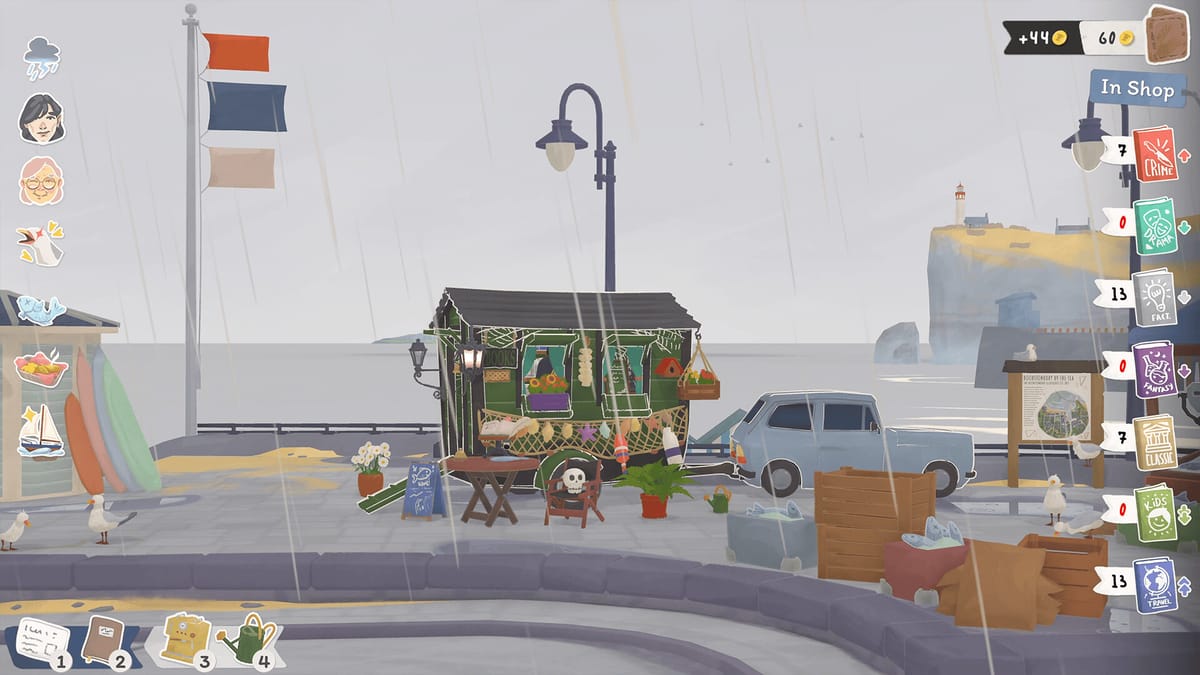
Tiny Bookshop is described as a management simulator set in a cozy mobile bookshop by the beach. Players take on the role of a bookseller, designing their shop and selling a mix of real-world and fictional books, with gameplay focusing on recommending the right titles to customers. The game has been praised for its low-stakes, relaxed gameplay, making it appealing to a wide audience.
Zapfe-Wildemann explained that the IARC’s digital certification allowed developers to navigate the rating process with minimal friction, but it lacked clear guidelines. Many developers have expressed frustration over the subjectivity inherent in the IARC system, especially following another incident involving Santa Ragione’s Horses, which faced its own ratings controversy. Following a similar automated rating process, Horses was flagged as “Adults Only” by Epic Games after a review, leading to its removal from the Epic Games Store.
In the case of Tiny Bookshop, the ESRB’s review required a detailed examination, which included video footage and marketing materials, flagging the word “Arsehole” in one of the game’s 300+ book descriptions. Neoludic Games was unaware of the rating change until the game was already removed from the eShop. “It would have been five minutes of work to replace the word had we been informed or had we had a way to track which swear word is considered severe in the IARC system,” Zapfe-Wildemann lamented.
This sudden shift in ratings led to a “mandatory update” on the digital storefront, resulting in the immediate delisting of Tiny Bookshop. On October 17, the game was ranked as the ninth bestseller in the U.S., and had previously sold over 300,000 copies within its first month. By December, that figure had surpassed 500,000. However, its absence from the eShop contributed to a loss of approximately 10,000 sales, according to Neoludic Games.
“On Switch, the bestseller list is one of the most critical discoverability tools the platform has,” Zapfe-Wildemann noted. “Our release momentum was still carrying us in the charts of some regions when the incident happened. It is incredibly difficult to re-enter those charts once that momentum is broken.” Although Muratov acknowledged that returning to the bestseller list is “very hard or impossible,” the studio has managed to re-enter the top 30 recently, attributing this success to the strong support from their global community.
The incident underscores ongoing challenges within the gaming industry regarding age ratings and content moderation. As platforms and developers navigate the complexities of rating systems, the case of Tiny Bookshop serves as a reminder of the potential consequences of a single word in an increasingly scrutinized digital landscape.