






















Geoff Keighley opened last week’s Game Awards with a personal address, reflecting on his experiences with loss and the comfort he found in gaming during difficult times. He emphasized the unifying power of games, stating, “Games have this incredible ability to hold us when we’re hurting, to lift us up when we feel small.” However, outside the event, a significant number of industry professionals felt overlooked, particularly regarding the Future Class program, which was intended to celebrate and support emerging talent in the gaming sector.
Last month, Game Developer reported that the Future Class program has been effectively suspended. This decision followed growing demands from its members for more substantial support, including funding, travel resources, and acknowledgment of pressing issues such as layoffs and global conflicts. Many felt that their voices were disregarded by Keighley and the Game Awards organization, leading to frustration and calls for action.
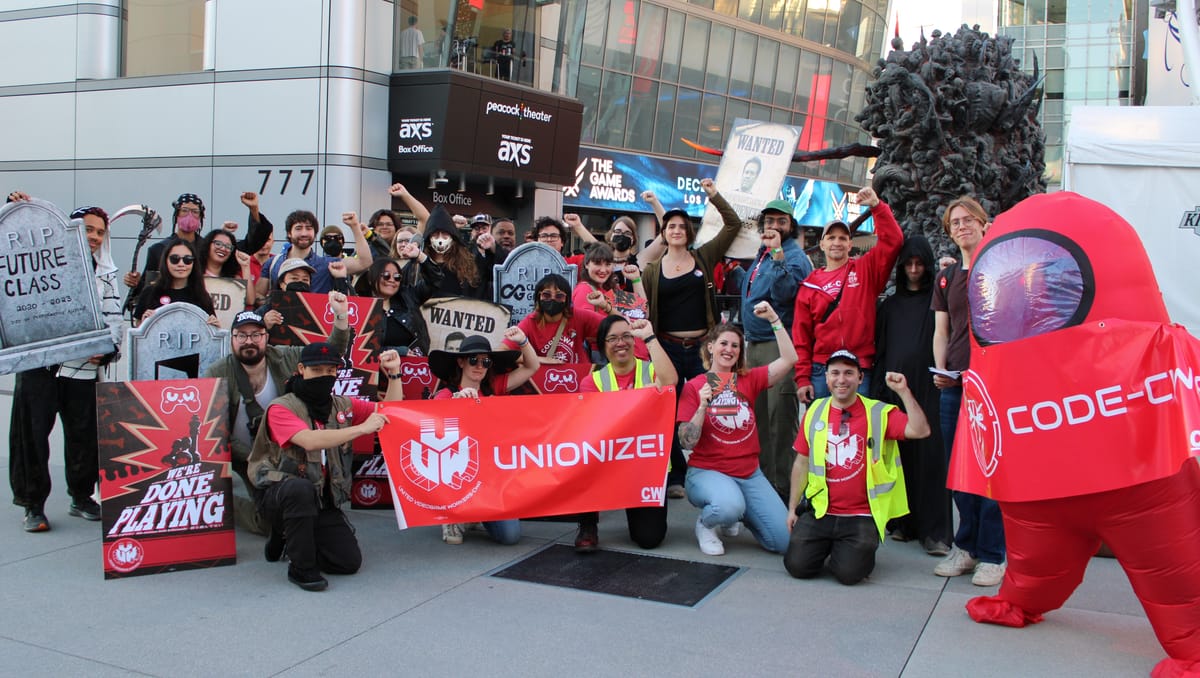
On the day of the awards, a protest organized by United Videogame Workers (UVW) took place outside the Peacock Theater in Los Angeles. The demonstration featured around 50 developers, some donning grim reaper outfits and carrying signs shaped like tombstones, with messages such as “RIP Future Class, Died Of Performative Allyship.” Anna C. Webster, a freelance writer and former Future Class member, expressed her disappointment in the program’s handling: “To say that we’re disappointed is probably an understatement. It’s very disappointing that someone with the platform Geoff has is not using it for good.”
Younès Rabii, another former Future Class member, echoed her sentiments, stating that once they sought to demand accountability, the program was quietly terminated. “The way that Future Class members were treated by The Game Awards, it feels like we outlived our usefulness of diverse faces smiling for the camera,” Rabii noted. His criticisms included details of a tense exchange with Keighley, where the host reportedly stated, “This is my show, and nobody gets to tell me how I should use my platform.”
“The moment we actually tried to ask for something better – or for them to put their money where their mouth is – they just quietly killed the program.”
The protest extended beyond the Future Class issue, with chants advocating for pro-union measures and against corporate layoffs. “No more layoffs, no more lies, no more playing with our lives,” the crowd shouted, highlighting the broader crisis facing the gaming industry, which has seen over 3,500 workers lose their jobs in 2025 alone. Kaitlin “KB” Bonfiglio, a local UVW secretary, pointed out the stark contrast between the millions spent on Game Awards advertisements and the financial insecurity many developers now face.
Despite attempts by security to disperse the protesters, they eventually secured their position outside the venue. Webster indicated that they had to prepare legal documentation to assert their right to protest. This year’s protest had historical precedence, following previous demonstrations led by SAG-AFTRA amidst voice actor strikes in earlier years. Sherveen Uduwana, a freelance developer and UVW treasurer, mentioned that this year’s demonstration was an escalation of past efforts aimed at drawing attention to critical industry issues.
Developers took turns speaking into a megaphone, emphasizing the sacrifices made by game creators in an industry that often overlooks their contributions. “We are the ones who poured our blood, sweat, tears, sanity, and health into these games,” one speaker declared, lamenting corporate exploitation. Timothy Staton-Davis, present in a grim reaper cloak, shared his own experiences with layoffs and mismanagement in studios he had worked for, illustrating the pervasive struggles within the industry.
While frustrations ran high, some attendees expressed a desire for positive change. Webster noted the UVW’s commitment to building a better gaming industry, stating, “We are building the future of the games industry with or without his branding, and if he wants to join us, he can anytime.” Uduwana added that UVW, which currently has 560 members, aims to provide tangible support for those within the industry.
In a sign of resilience, Staton-Davis announced his plans to form a worker-owned studio, Melanated Game Kitchen, focused on creating culturally rich narratives and uplifting BIPOC voices in gaming. This reflects a growing movement among industry professionals to take control of their narratives and advocate for a sustainable future in gaming.
As the dust settles from the protest and the awards ceremony, the future of industry initiatives like Future Class remains uncertain. However, the emergence of organizations like UVW points to a burgeoning solidarity among game developers, who are increasingly vocal about their working conditions and the need for systemic change. Whether these efforts will reshape the gaming landscape remains to be seen, but the commitment from many within the industry to advocate for their rights is unmistakable.