














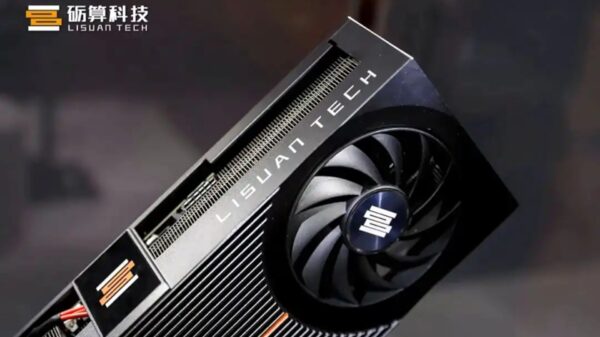











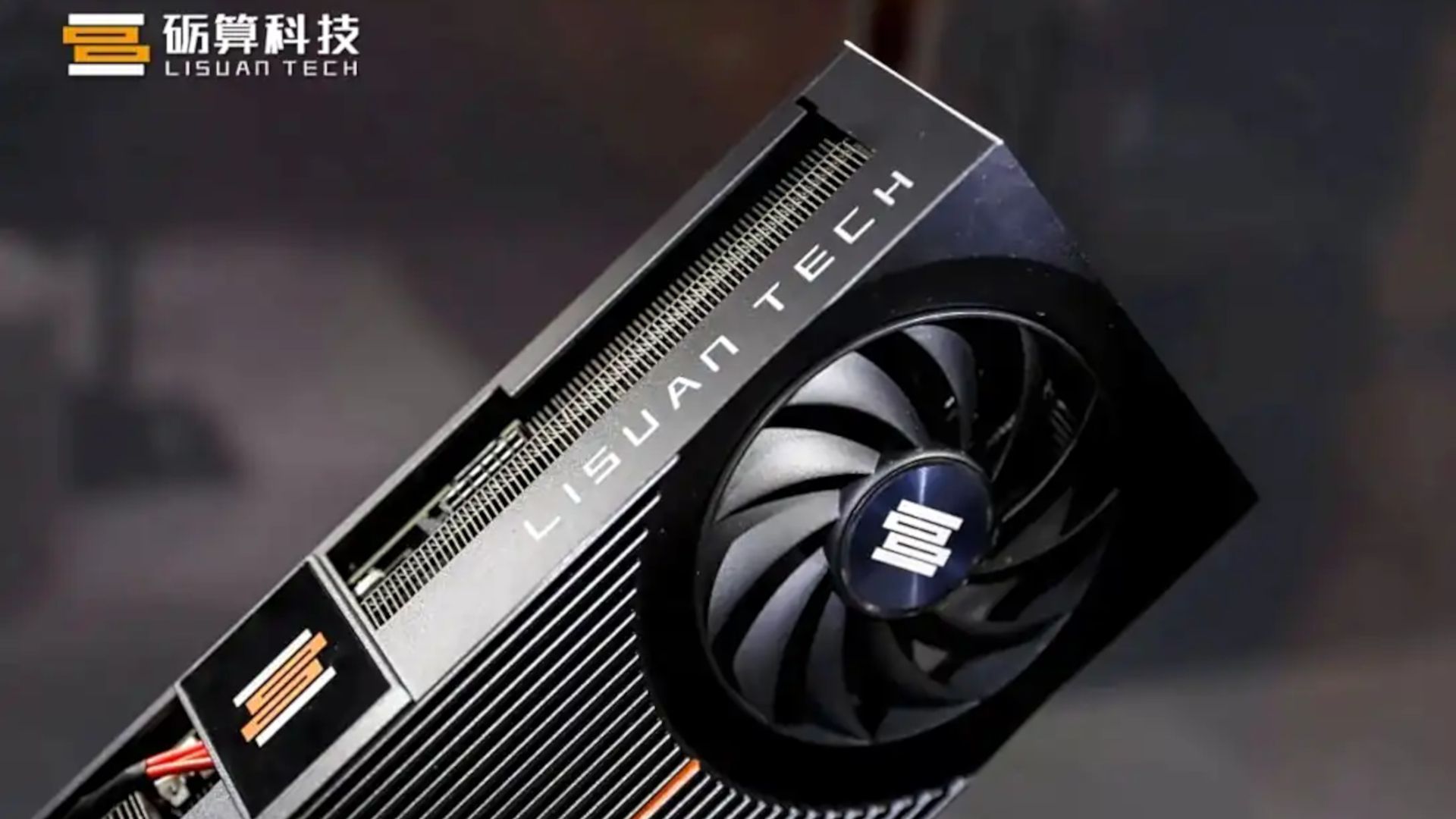
Lisuan Technology has made significant strides in the GPU market with the launch of its G100 series, based on the proprietary “TrueGPU” architecture and produced using TSMC’s N6 process. This development marks a notable achievement for a Chinese company in a space traditionally dominated by AMD and Nvidia. The initial deliveries of the G100 series began recently, as reported by IT Home, following a production kickoff on September 15, 2025.
The G100 family consists of two key models: the gaming-focused 7G106 and the enterprise-oriented 7G105. The 7G106 has garnered particular attention, claiming performance levels on par with Nvidia’s RTX 4060 and even exceeding it in early benchmark tests. Technical specifications reveal a robust configuration, featuring 192 texture units, 96 ROPs, and an FP32 throughput reaching up to 24 TFLOP/s. Such metrics suggest the potential for a high-performance experience for gamers.
Equipped with 12GB of GDDR6 VRAM across a 192-bit wide bus, the 7G106 is tailored for gaming applications, while the 7G105 ups the ante with 24GB of memory and error-correcting code (ECC) support, making it suitable for workstation tasks. Both GPUs are compatible with contemporary APIs, including DirectX 12, and utilize the PCIe 4.0 interface. Notably, Lisuan has introduced a custom upscaling technology named NSRR, which bears similarities to Nvidia’s DLSS and AMD’s FSR. However, unlike its competitors, Lisuan has tailored its offerings to support Microsoft’s Windows-on-Arm initiative.
The commencement of shipments indicates that the G100 series has successfully transitioned into commercialization, a significant milestone for Lisuan and a reflection of China’s ambitions for self-reliance in technology. The G100 series stands out in a market where local players, such as Moore Threads, have yet to establish a comparable presence. As customers begin to receive these GPUs, the anticipation surrounding their performance claims is palpable, and the broader implications for the GPU landscape are noteworthy.
With the G100 series finally reaching the market, stakeholders are eager for comprehensive reviews that will confirm or challenge the impressive benchmarks displayed during their announcement. If Lisuan’s performance claims hold true, the G100 series could emerge as a viable alternative to established products from AMD and Nvidia, paving the way for increased competition and potentially lower prices in the GPU market.
The arrival of Lisuan’s G100 series is not just a corporate triumph; it symbolizes the evolving landscape of the global GPU market. As technology advances and consumer demand grows, the success of homegrown alternatives like the G100 can inspire further innovations and competition, potentially reshaping the dynamics of the industry in the years to come.