






















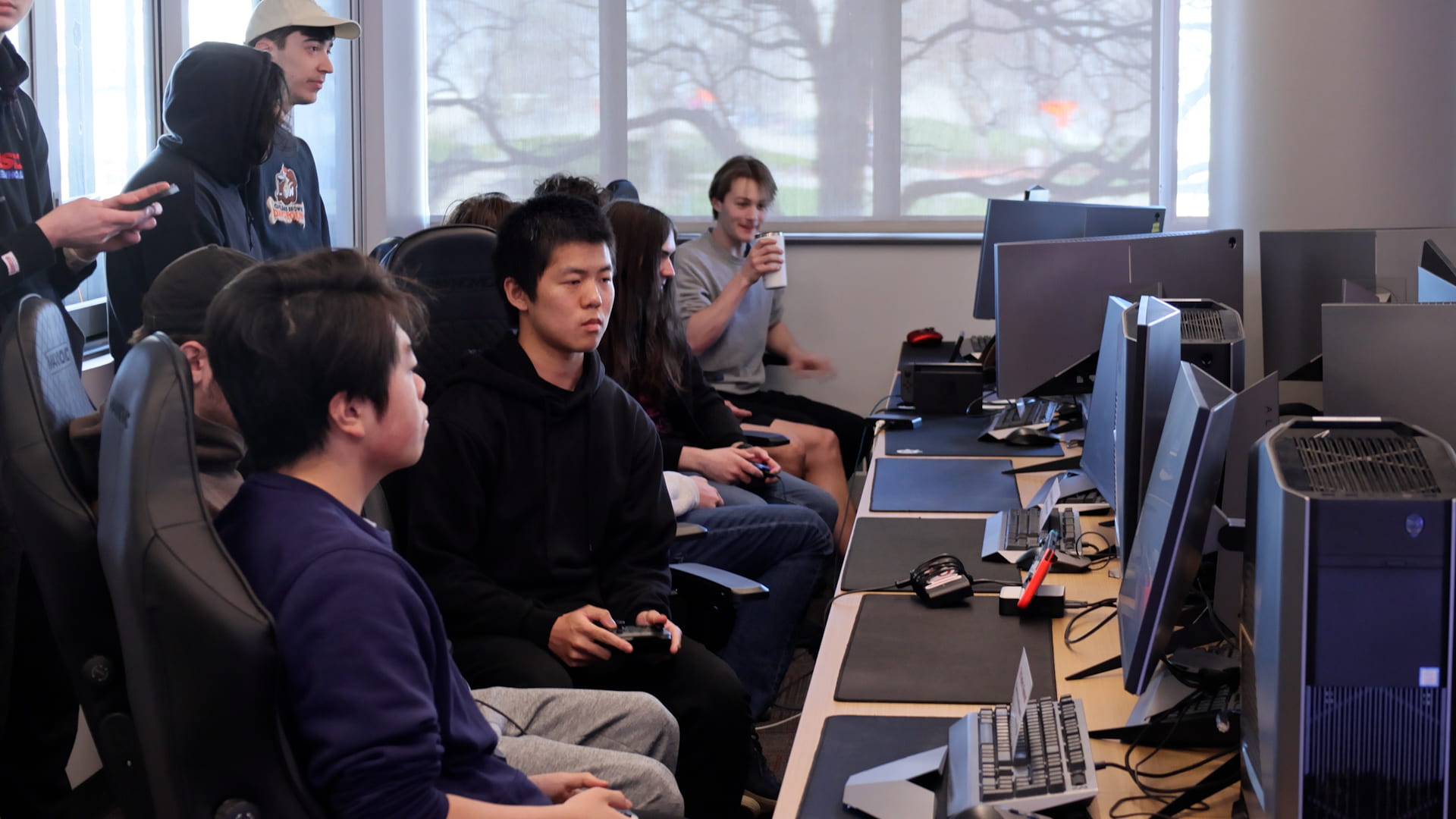
As Ohio State University’s esports team prepares for its next match, the atmosphere in the Lincoln Tower esports arena is palpable with anticipation. Just an hour before they face off against Maryville in the highly competitive world of Valorant, the athletes focus intently on customizing their setups—adjusting keyboards, mice, and headsets to optimize performance. Hand warmers circulate among the players while they review game footage, discuss strategies, and play preliminary rounds in a final attempt to sharpen their skills.
Each member of Ohio State’s squad dons a jersey, emblazoned with their gamer tag, as they gather for a pep talk led by their coach Wisam Elmogaber. As they step onto the virtual battlefield, the sense of camaraderie and shared purpose is evident. Ohio State’s Valorant roster has been among the school’s most successful teams, bringing home multiple trophies and accolades from competitions across the Big Ten and beyond. Yet, their status as athletes remains a topic of hot debate.
The discussion surrounding whether esports competitors qualify as athletes is nuanced. “Being called an athlete is, of course, a great honor, but it’s not necessary,” remarks Dr. John Price, Ohio State University’s esports manager. This sentiment highlights a growing acknowledgment of the intensive skill and dedication required to compete at high levels in esports. However, critics argue that the absence of traditional gross motor movements disqualifies them from the athlete designation. Dr. Seth Jenny, an associate professor in the Department of Exercise Science at Slippery Rock University, asserts that many people dismiss esports players as athletes because they are not engaged in what is traditionally viewed as physical activity.
Yet, comparisons to conventional sports reveal a broader definition of athleticism. Sports like rifle shooting, archery, and auto racing include minimal physical movement compared to traditional team sports but are still recognized as athletic endeavors. The ongoing evolution in the definition of an athlete and the growing visibility of esports indicate that their competitive landscape is gaining legitimacy. Boise State University has already taken significant steps by placing its esports program under its athletic department, and U.S. policies have begun to recognize esports competitors, allowing foreign players to apply for P-1 athlete visas. Furthermore, the International Olympic Committee is set to host the inaugural Olympic Esports Games in 2027.
This recognition is a step towards validating the skill and dedication that esports athletes demonstrate. “Usually, it’s just people who aren’t familiar with high-level gaming and the skill involved in it that necessarily believe it’s not a sport,” Jenny explains. To achieve elite status, training is essential. Ohio State’s premier teams engage in training sessions at least three times a week, focusing on video analysis, mechanical skills, and strategic scrimmages. Interestingly, the training regimens can vary significantly based on the game; for example, players of Valorant and League of Legends often experiment with strategies, while Super Smash Bros. competitors might prioritize video reviews and personalized coaching.
The enthusiasm surrounding esports extends beyond the players themselves. Passionate fanbases organize watch parties for major events like the League of Legends World Championship, drawing in hundreds of thousands of viewers. Major sponsorships from companies such as Monster Energy and Red Bull further solidify the commercial viability and cultural significance of esports. According to Price, “You still see the elements of fandom that exist because you recognize that same passion from the communities.”
Ohio State’s esports program exemplifies the blending of competitive spirit, dedicated training, and a thriving fan culture. While the debate about the definition of an athlete continues, players are less concerned about titles and more focused on gaining recognition for their hard work and skill. “I don’t find it as important having to be called an athlete,” Price states. “It’s more that they’re competitors and they’re recognized for the hard work they put into it, the skill.”
As the boundaries of competition continue to expand, the future of esports looks promising. With increasing institutional support and recognition, the landscape for competitors at Ohio State and beyond is set to evolve even further, possibly reshaping the very definition of what it means to be an athlete in the 21st century.