


























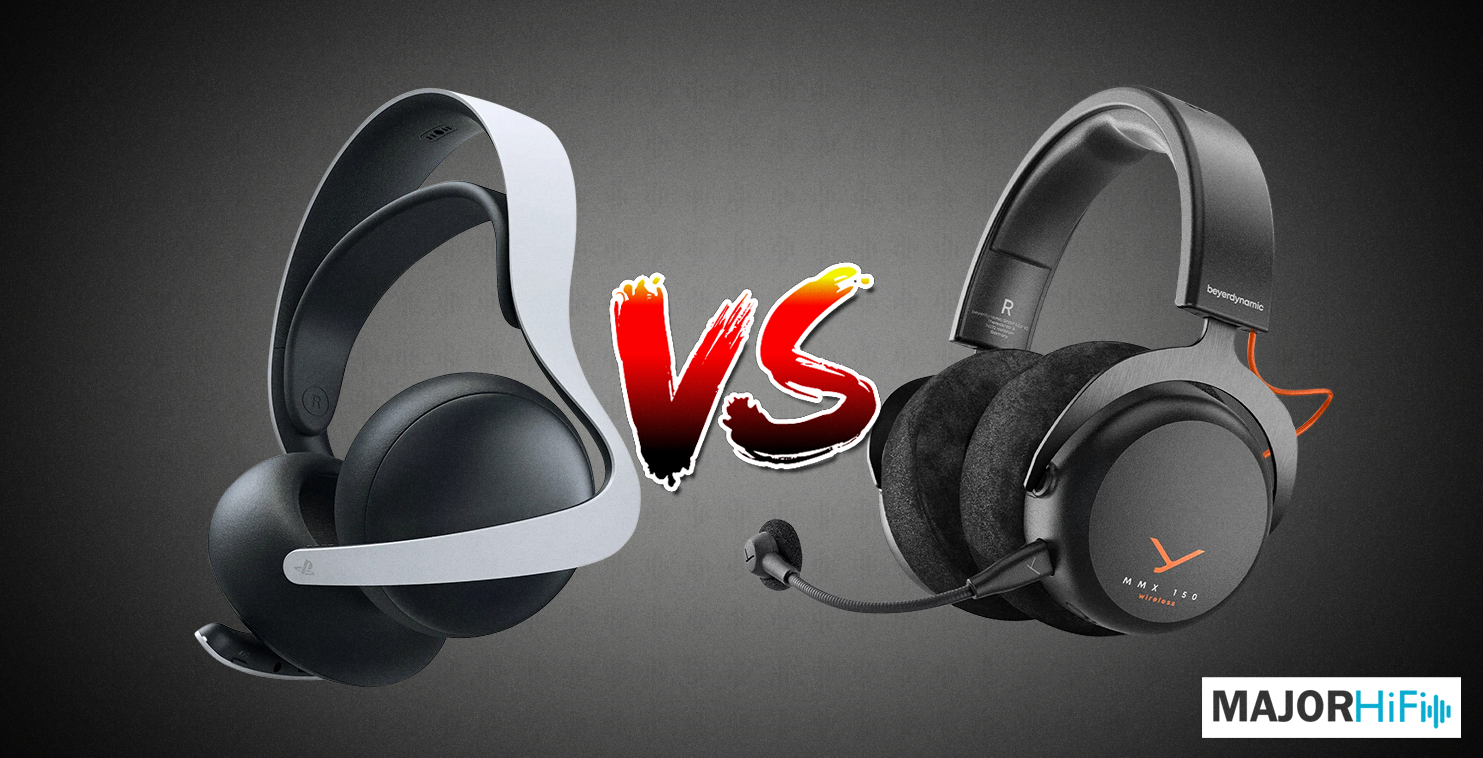
In the world of mid-range wireless gaming headsets, the competition is heating up, with the Beyerdynamic MMX 150 Wireless and Sony PlayStation Pulse Elite emerging as two noteworthy contenders. Both headsets aim to enhance the gaming experience through immersive audio and reliable wireless performance, yet they diverge significantly in design, tuning, and intended use. This comparison explores their strengths and weaknesses across various categories, from comfort and connectivity to sound quality and microphone performance.
The Beyerdynamic MMX 150 Wireless focuses on versatility, featuring traditional dynamic drivers that deliver a strong midrange presence and reliable bass response. Its closed-back design, complemented by plush memory-foam ear pads, ensures comfort during extended gaming sessions. In contrast, the Sony Pulse Elite sports a more futuristic, console-centric aesthetic, utilizing planar magnetic drivers that provide an expansive soundstage. While the Pulse Elite’s design feels more substantial, it may be less comfortable for prolonged use due to its weight.
Both headsets offer unique designs that cater to different user preferences. The MMX 150’s minimalist appearance appeals to those seeking a low-profile look, while the Pulse Elite’s larger frame is more aligned with typical gaming gear. The functionality of each headset also aligns with their intended use cases. The Beyerdynamic model includes a detachable microphone, allowing it to double as casual headphones, whereas the Pulse Elite features a retractable mic optimized for seamless integration with the PlayStation ecosystem. This duality makes the MMX 150 Wireless a better fit for gamers who want to switch between gaming and everyday casual use.
Microphone performance is another key differentiator. The MMX 150’s detachable microphone excels in delivering clear voice capture, making it reliable for team communication and streaming. Meanwhile, the Pulse Elite’s retractable mic benefits from AI-based noise suppression, effectively handling background noise but occasionally compressing voice tones. In terms of connectivity, the MMX 150 supports both Bluetooth and a low-latency USB dongle, making it versatile across multiple platforms. Conversely, the Pulse Elite relies on Sony’s PlayStation Link technology for optimal performance, which may limit its usability on non-Sony devices.
Battery life is a strong point for the Beyerdynamic MMX 150 Wireless, offering up to 50 hours on a full charge, allowing for extended gaming sessions without frequent recharging. The Pulse Elite, while respectable with around 30 hours of battery life, may require more frequent charges for heavy users. Both headsets offer quick charging features, but the MMX 150’s long-lasting performance gives it a notable advantage.
When it comes to sound quality, the MMX 150 delivers an intimate and precise soundstage, focusing on clearly defined spatial placement, which is essential for competitive gaming. The ability to localize sounds like footsteps and gunfire ensures an edge during multiplayer scenarios. On the other hand, the Pulse Elite creates a more enveloping soundscape, enhancing immersion through its planar magnetic drivers. This broader presentation excels in expansive environments, where atmospheric effects and ambient sounds are rendered with depth.
The low-end response of the MMX 150 is disciplined and controlled, ensuring that bass elements do not overshadow critical midrange frequencies. In contrast, the Pulse Elite emphasizes texture and nuance in its bass presentation, allowing for a more natural feel in atmospheric gaming scenarios. While both headsets offer unique approaches to sound, the MMX 150 is tailored more for competitive players who prioritize clarity, while the Pulse Elite caters to those looking for an immersive audio experience.
Midrange performance is notably strong in the MMX 150, with dialogue and ambient details prominently featured, making communication effortless even in chaotic game settings. The Pulse Elite, however, presents a smoother midrange, effectively blending voices with music and sound effects, making it particularly well-suited for narrative-driven games.
High frequencies on the MMX 150 are bright and revealing, contributing to its overall clarity, although they can verge on sharpness in certain contexts. The Pulse Elite takes a more relaxed approach, favoring comfort for long gaming sessions while still retaining detail in the soundscape. Each headset appeals to different user preferences, highlighting the importance of personal taste in audio quality.
Ultimately, both the Beyerdynamic MMX 150 Wireless and Sony PlayStation Pulse Elite offer distinct features tailored to their target audiences. The MMX 150 excels in battery life, cross-platform compatibility, and competitive audio performance, making it a versatile choice for gamers who engage across various devices. Conversely, the Pulse Elite shines within the PlayStation ecosystem, providing an immersive experience that integrates seamlessly with Sony hardware. As gamers continue to seek the best audio solutions for their experiences, the choice between these two headsets will largely depend on individual priorities and gaming preferences.
The Beyerdynamic MMX 150 Wireless is available at Audio46, while the Sony PlayStation Pulse Elite can be found through various retailers.
—
MAJORHIFI may receive commissions from retail offers.