
























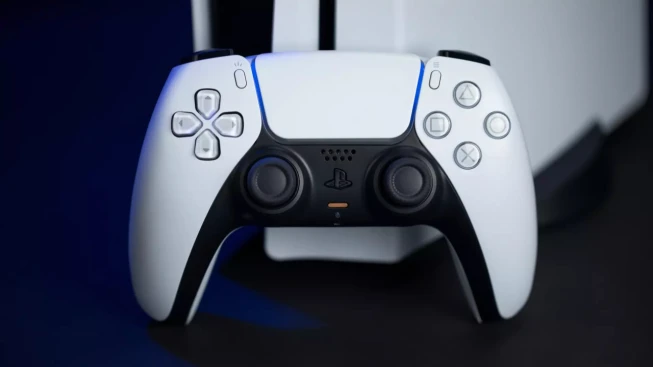
A new iteration of the PlayStation 5 DualSense controller, commonly referred to as the DualSense V2, has recently gained traction within the gaming community. This upgraded controller, which features a matte plastic shell, is now shipping with newer PlayStation 5 consoles and comes bundled with the Icon Blue Special Edition controller. One of the standout enhancements of the DualSense V2 is its significantly improved battery life, reportedly lasting up to 15 hours on a single charge, a notable upgrade for PlayStation 5 users accustomed to shorter play sessions.
The packaging of the Icon Blue Special Edition is designed to catch the eye, highlighting the model number CFI-ZCT2W, which is essential for consumers looking to confirm that they are purchasing the newer version. Upon opening the box, the controller’s aesthetic makes an immediate impression. The face buttons are more pronounced and shinier, reflecting light effectively. The cohesive two-tone blue design, paired with white markings on the buttons, enhances its visual appeal. However, enthusiasts may feel overwhelmed by the number of DualSense variants available, with the internal V2 designation serving as the primary distinguishing feature beyond color.
Disassembling the controller reveals several internal changes that set the DualSense V2 apart from its predecessor. The battery is now encased in a cage-like plastic holder, a departure from earlier designs, which hints at potential future iterations featuring removable batteries. Notably, the removal of a rear-facing microphone raises questions about the implications for audio quality during gameplay. The original microphone was believed to reduce background noise, so its absence suggests a shift in how sound processing is handled within the controller.
Despite the improved longevity of the DualSense V2, the battery capacity remains at 1560 mAh. This indicates that the enhancements in battery life are likely attributed to increased efficiency rather than a larger battery. Previous models typically provided around 10 hours of gameplay, meaning a jump to 12-15 hours represents a substantial improvement, likely due to internal modifications in the controller’s design.
A side-by-side comparison of the mainboards from the V1 and V2 controllers illustrates significant differences in their architecture. The original V1 board contains three large chips, while the V2 version has streamlined this to two. The absence of a microphone port on the V2 board aligns with the hardware changes made. The integration of a MediaTek Bluetooth low-power chipset in the V2 is particularly noteworthy. This chip aids in enhancing wireless communication and likely contributes to reducing overall power consumption. Although the power management chip appears unchanged, the newer Sony processor is a smaller and more efficient revision, suggesting advancements in functionality, including audio processing.
Real-world testing of the DualSense V2 will ultimately determine its performance. Users will keep track of charging cycles over a week to assess how the battery life holds up under regular use. For gamers accustomed to high-end controllers like the DualSense Edge, transitioning back to the standard DualSense may feel like a compromise, especially given the Edge’s premium price point paired with relatively short battery life.
Future Implications
The internal modifications observed in the DualSense V2 raise intriguing prospects for Sony’s upcoming controller designs. Players will be hopeful for similar efficiency improvements in the DualSense Edge, where enhanced battery life is particularly needed. The introduction of a dedicated battery holder fuels speculation that we may see a model featuring a truly removable battery, enabling users to swap batteries without needing to disassemble the controller completely. While the current design still necessitates access for battery replacement, it represents a significant step forward in user-friendliness.
In conclusion, the DualSense V2 is more than a mere aesthetic upgrade; it embodies substantive changes within its design aimed at improving efficiency, reducing component count, and extending battery life without increasing cell size. While it remains to be seen how the removal of the rear microphone affects sound quality during online play, those who have tested the V2 controller will likely focus on its battery performance and audio quality as key factors in their overall experience.