























Choosing between PlayStation and Xbox has long been a topic of debate among gamers, as preferences can vary widely based on several factors including hardware, game libraries, and controller designs. One noticeable difference between the two ecosystems is the configuration of their thumbsticks: Sony opts for symmetrical layouts, while Microsoft favors a staggered design. This fundamental difference often influences players’ comfort and gameplay experience, particularly when transitioning between systems.
Although third-party controllers have emerged to offer more layout diversity for PlayStation users, the same cannot be said for Xbox players. For those accustomed to symmetrical thumbsticks, navigating certain games on Xbox can feel less intuitive. However, the recent release of the Hyperkin Competitor controller aims to address this gap with its unique design and pro-level features.
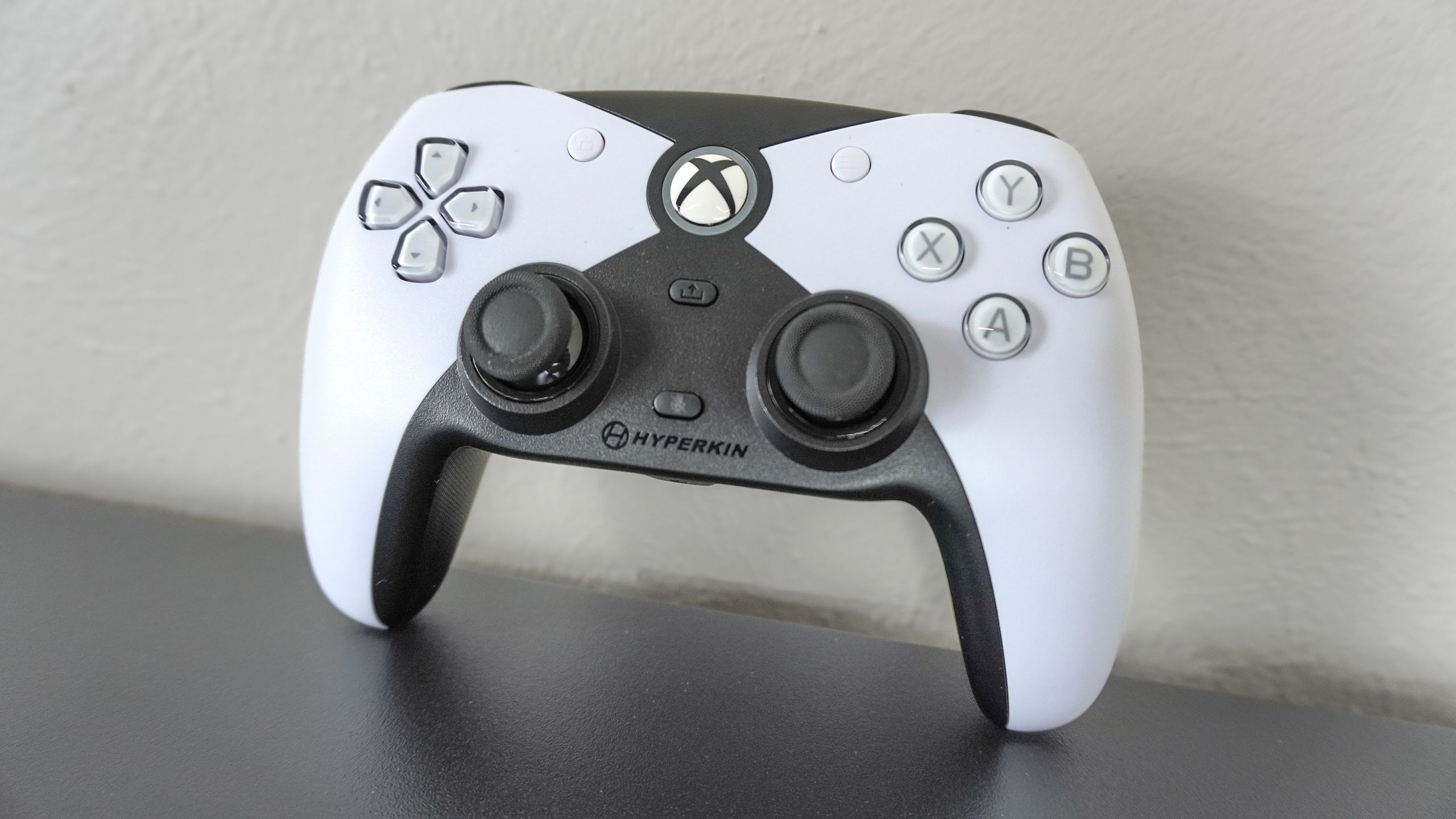
Upon first glance, the Hyperkin Competitor bears a striking resemblance to Sony’s DualSense controller, particularly in its two-tone black and white design. Unlike Hyperkin’s previous retro-style remakes of Xbox controllers, such as The Duke, the Competitor offers a modernized look tailored for today’s gaming landscape. It features symmetrical thumbsticks and a distinctive “X” formation around the Xbox button at the center, diverging from the traditional layout of its predecessors.
Included with the Hyperkin Competitor is a 10-foot detachable USB-C cable, though it lacks swappable thumbstick caps or a carrying case. While it isn’t a wireless controller—largely due to Microsoft’s licensing fees—it does come equipped with several high-performance features. Notably, it utilizes Hall Effect joysticks, which help mitigate stick drift, and metal anti-friction rings that facilitate a smoother response during gameplay.
The design of the triggers on the Hyperkin Competitor further distinguishes it from standard Xbox controllers; they are wider and longer, reminiscent of the DualSense. The bumpers, however, are smaller and combine elements from both Sony and Microsoft designs. The USB-C port is conveniently accessible, allowing for flexibility in cable usage, a welcome feature among gamers who may prefer a higher-quality cable.
One of the standout features of the Hyperkin Competitor is the inclusion of two remappable back buttons, a feature that many competitive players seek to enhance their performance. Remapping is straightforward, accomplished by pressing the “M” button located between the trigger lock toggles. Additionally, a 3.5mm audio jack is built into the controller, accommodating a variety of gaming headsets.
The performance of the Hyperkin Competitor during gameplay offers a plug-and-play experience. Connecting it to an Xbox Series X yields immediate responsiveness, allowing players to dive straight into their favorite titles without any configuration hassle. While not a full replica of the DualSense controller, the D-pad and face buttons provide familiar tactile feedback. The thumbsticks, enhanced by the controller’s magnetic Hall Effect sensors, allow for precise movements—an advantage for competitive gaming.
Despite a history of preferring staggered thumbsticks for genres like first-person shooters and action games, the Hyperkin Competitor has proven to be versatile. Games like Session, a skateboarding simulator, benefit from its symmetrical layout, allowing for an intuitive control scheme that enhances the overall experience. The ability to remap back buttons to crucial actions like pushing while skating offers a level of convenience that can be advantageous during gameplay.
While the Hyperkin Competitor is not without its drawbacks—most notably the lack of wireless functionality—it stands out as a well-built, third-party controller that offers high-quality features at a competitive price of $50. This price point positions it as a more accessible option compared to the standard Xbox Wireless Controller and the DualSense, particularly for gamers who prefer symmetrical thumbsticks.
As the gaming landscape continues to evolve, the introduction of controllers like the Hyperkin Competitor opens new avenues for players transitioning between ecosystems. Its design and features serve to bridge the gap for those who may feel more comfortable with a symmetrical layout, potentially facilitating a smoother integration into the Xbox gaming community.