














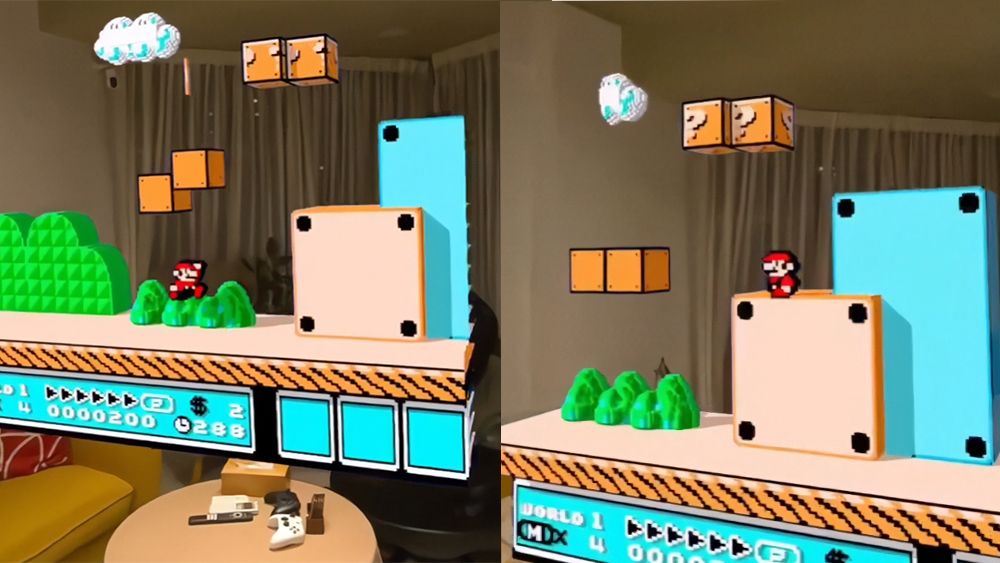
In a fascinating blend of nostalgia and modern technology, retro gaming enthusiasts are now able to experience classic NES titles like Super Mario Bros in a new dimension—augmented reality (AR). The innovative 3DSenVR emulator, developed by Geod Studio, allows players to interact with their favorite 8-bit games in a 3D diorama format, enhancing the gameplay experience significantly.
This remarkable emulator not only rejuvenates Super Mario Bros but also supports a variety of other iconic titles including Mega Man, Metroid, The Legend of Zelda, Final Fantasy, Duck Hunt, and Castlevania. Players can choose between full VR immersion or a more conventional desktop mode, catering to different preferences and setups.
Game developer and retro gaming aficionado Garay took to social media platform X to share his excitement about this groundbreaking emulator. Garay posted a video showcasing how Super Mario Bros can be played in this engaging new format, demonstrating the 3D elements that make it stand out from traditional gameplay. He noted, “3D + AR NES gaming hits differently,” encapsulating the enthusiasm surrounding this technological advancement.
To enjoy the experience, users need a VR or AR device alongside the emulator, which has sparked mixed reactions regarding its immersive qualities. While some players revel in the idea of Mario jumping over household clutter, others suggest that the real-world distractions could detract from the gameplay experience. One user humorously remarked about their dream of playing in AR while surrounded by their everyday chores, reflecting a common sentiment toward gaming escapism.
For those interested, the 3DSenVR emulator is available for download on Steam, presenting an opportunity for players to engage with these classic games in a novel way. As the gaming landscape continues to evolve, the merging of retro titles with modern technology not only revitalizes beloved classics but also allows for fresh experiences that can appeal to both seasoned gamers and newcomers alike.
This advancement underscores a broader trend within the gaming industry, where nostalgia meets innovation. With the potential to reshape how players interact with classic titles, the future of retro gaming in augmented and virtual reality stands to offer even richer experiences. As game developers explore these new frontiers, players can anticipate more inventive ways to connect with the games that shaped their childhoods, paving the way for a unique blend of past and present.