
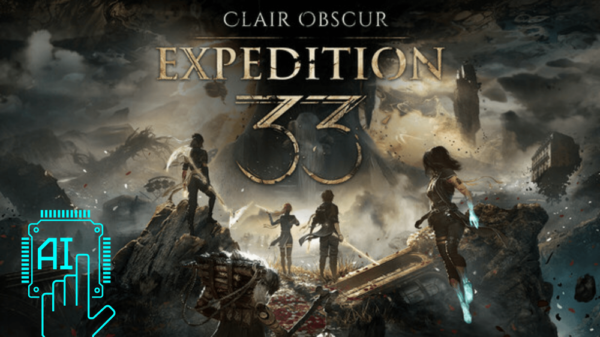

























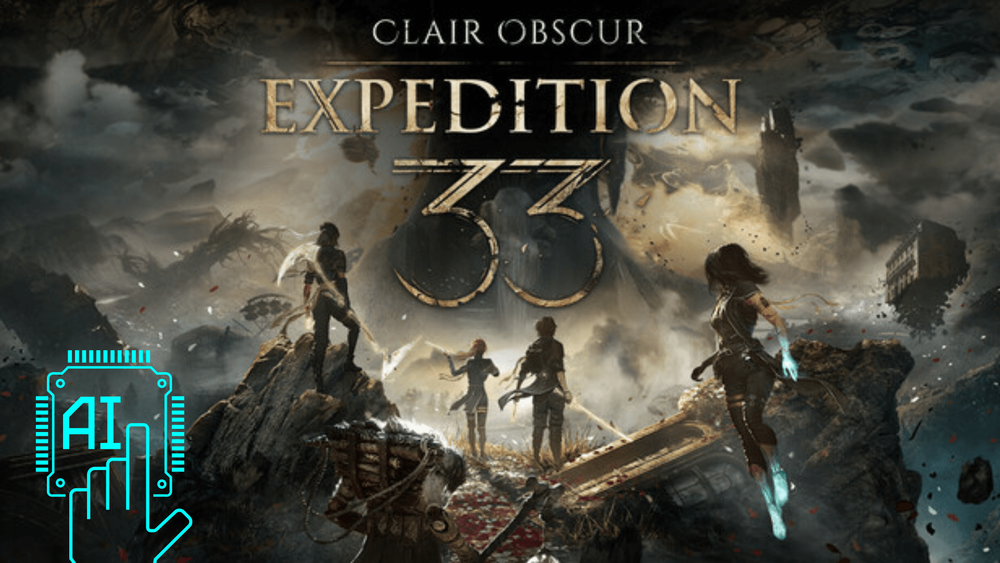
Clair Obscur: Expedition 33 has become a focal point of controversy this month, not due to its gameplay or narrative, but because of its use of artificial intelligence during development. The title recently lost its Indie Game of the Year award after it was revealed that AI tools were employed in the creation process. Although no AI-generated content appears in the final release, this revelation has reignited ongoing debates regarding the role of generative AI within the gaming industry.
This controversy comes amidst a growing scrutiny of AI’s role across major game studios. Projects associated with renowned franchises such as Divinity from Larian Studios and the highly anticipated Battlefield 6 have also drawn public attention for their involvement with AI in development. Collectively, these instances underscore how quickly AI has transitioned from a behind-the-scenes tool to a central issue for developers, players, and award organizations alike.
Developers have consistently emphasized that AI typically serves logistical purposes rather than creative output. In the case of Clair Obscur: Expedition 33, AI was reportedly used as a placeholder during development, while all final assets were crafted by human developers. Studios like Larian have echoed this sentiment, explaining that AI may facilitate planning or workflow organization, but that core development remains firmly in human hands.
Despite these clarifications, player reactions have been mixed. Some gamers argue that any AI involvement undermines the creative integrity of the project, while others contend that such tools are akin to existing software that aids in streamlining production. The absence of a clear, industry-wide definition for acceptable AI use has left considerable room for interpretation, especially in relation to awards and recognitions.
Award Decisions and Industry Precedent
The disqualification of Clair Obscur: Expedition 33 from the Indie Game of the Year category has sparked discussions about consistency and transparency in award criteria. While the Indie Game Awards committee has defended its decision, larger establishments like The Game Awards have yet to publicly clarify whether AI-assisted development could influence eligibility in the future.
This ambiguity carries broader implications. If any AI utilization at any stage warrants disqualification, studios may need to reevaluate their workflows. Conversely, establishing separate categories for AI-assisted games could fundamentally alter the structure of industry awards. The gaming sector now faces the challenge of balancing technological advancement with traditional values of craftsmanship and originality.
One of the primary concerns revolves around whether games developed with AI assistance should compete directly against those created entirely through conventional means. Critics assert that awards should celebrate human creativity and effort, and that AI-supported development risks establishing an uneven playing field. Proponents of stricter regulations argue that recognition should favor projects crafted without automated assistance, regardless of how limited that assistance may be.
Others contend that contemporary game development is already heavily reliant on tools that automate complex processes, with AI serving as the next step in that evolution. This debate reflects similar conversations occurring in various creative fields, including film, publishing, and web3 initiatives, where automation and authorship are increasingly intertwined.
As AI remains relatively limited in mainstream game development, player sentiment continues to wield significant influence. Consumer reactions, whether expressed through purchasing decisions or online discussions, may ultimately shape how studios approach AI in the future. Some developers have suggested that transparency will be vital, while others await clearer standards from industry organizations.
For the time being, Clair Obscur: Expedition 33 stands as a case study in how rapidly industry norms can be challenged. Whether this moment will lead to formal guidelines or ongoing debate is yet to be determined, but it is evident that AI will continue to be a defining topic in gaming discourse for the foreseeable future.
Why did Clair Obscur: Expedition 33 lose its award?
The game lost its Indie Game of the Year award after it was confirmed that AI tools were used during development, even though no AI-generated content appears in the final game.
Was AI used to create in-game content for Clair Obscur: Expedition 33?
According to available information, AI was used only as a placeholder during development. All final assets in the released game were created by human developers.
Are other studios using AI in game development?
Yes, several studios have acknowledged limited AI use, often for planning or workflow support. Projects associated with Larian Studios and Battlefield 6 have also been discussed in this context.
Could AI use affect future game award nominations?
It is possible. While some award bodies have taken action, others have not yet clarified their stance, leaving the issue unresolved.
How can players respond to AI use in games?
Players can express their views through community discussions and purchasing decisions, which may influence how developers and publishers approach AI in the future.