










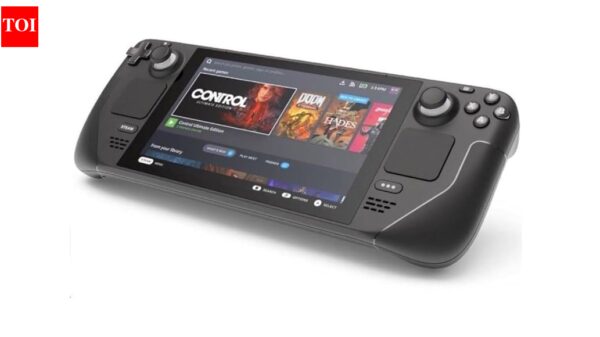
















Valve has officially ended production of its original LCD Steam Deck, a significant move that marks the conclusion of the company’s most affordable handheld gaming option. This announcement, reflected on the Steam Deck store page, confirms that the 256GB LCD model will no longer be manufactured, leaving remaining units as the final opportunity for purchase at the original price of $399. With this decision, the entry price for new Steam Deck buyers has effectively increased to $549, as only OLED models will be available moving forward.
The discontinuation of the LCD model raises important questions about Valve’s future pricing strategy for its hardware. The new lineup will consist solely of the 512GB OLED and 1TB OLED variants, which are priced at $549 and $649, respectively. Industry analysts speculate that rising costs for components, particularly RAM and storage devices potentially influenced by demand from the AI sector, may have rendered the budget model financially unfeasible. Even though Valve has not provided a formal reason for the discontinuation, their aggressive Black Friday and Cyber Monday discounts on LCD units may hint at efforts to clear out remaining inventory prior to this announcement.
The original Steam Deck, which debuted in February 2022, played a pivotal role in establishing the portable PC gaming category, paving the way for competitors like ASUS ROG Ally and Lenovo Legion Go. The budget-friendly pricing of the LCD model had made portable gaming accessible to consumers who might not have been able to justify the expense of premium handheld devices. With its departure, the landscape of portable gaming hardware is shifting, and its legacy as an entry point into handheld gaming remains secure.
However, prospective buyers interested in the budget model must act quickly, as current stock represents the last opportunity to purchase the device at its original price. Once these units are sold, prospective owners may only find the device through resellers at inflated prices. While Valve has confirmed that it will continue to support existing LCD Steam Deck units, the absence of the budget model signals a significant change in how the company approaches its handheld offerings.
This development also raises broader questions about the future of handheld gaming, particularly as competitors like Microsoft continue to emphasize premium gaming devices. With the market evolving rapidly, and component costs remaining high, the feasibility of launching another console-priced Valve handheld appears increasingly uncertain.
In conclusion, the discontinuation of the LCD Steam Deck marks a pivotal moment for both Valve and the handheld gaming market. As the company pivots toward its higher-end OLED lineup, its future pricing strategy and the potential introduction of new hardware remain topics of speculation. The implications of this decision are likely to resonate throughout the gaming community, impacting both consumers and competitors alike as the landscape of portable gaming continues to evolve.