























The Xbox division at Microsoft has faced significant challenges in 2025, a year marked by layoffs, declining sales, and a perceived crisis in strategy. During the Gamescom video games trade fair in Cologne, Germany, the company was under scrutiny as former executives criticized its direction, suggesting that Microsoft appears unable or unwilling to ship new hardware effectively. Laura Fryer, a former executive producer at Microsoft Game Studios, highlighted concerns in June over the company’s hardware capabilities, while ex-Blizzard Entertainment president Mike Ybarra referred to Xbox’s strategy as “confusing” and potentially detrimental to its future.
Financial reports for the first quarter of fiscal 2026 revealed a 2% decrease in overall gaming revenue year-over-year and a staggering 29% drop in Xbox hardware sales. The broader console industry has also struggled, with research firm Circana noting a 27% year-over-year decline in hardware spending during November—a month typically characterized by strong sales. This period was particularly grim for Xbox, which saw a dramatic 70% drop in sales, the most significant decline among the major console competitors. In contrast, Nintendo’s Switch 2 had sold over 10 million units since its June release, and Sony’s PlayStation 5 reached approximately 9.2 million units sold in 2025.
Despite the turmoil, Microsoft opted not to comment on the sales figures but has refrained from regularly reporting console unit shipments since 2015, allowing the gap with competitors to widen. The Xbox Series S and Series X, launched in 2020, managed to move only 1.7 million units in a year, a number that fell short of the original Nintendo Switch’s 3.4 million units sold this year, as per estimates from VGChartz.
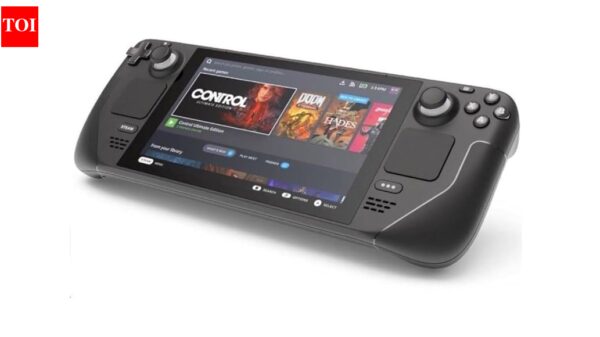
Amidst this challenging landscape, Valve has made waves with the announcement of its next-generation Steam Machine set to launch in 2026. This console-PC hybrid has generated buzz, with experts claiming it could represent the vision Xbox hopes to achieve. Microsoft CEO Phil Spencer has acknowledged the competition but also emphasized a broader focus. “We’re not in the business of out-consoling Sony or out-consoling Nintendo,” Spencer stated in a 2023 podcast, reaffirming the company’s commitment to expanding gaming access across various platforms.
Microsoft’s strategic pivot appears to align with a vision for an all-encompassing entertainment hub, as echoed by CEO Satya Nadella, who mentioned the goal of gaming “everywhere in every platform,” suggesting a future where consoles may operate more like PCs. This sentiment was reflected in statements from Xbox President Sarah Bond, who indicated that the next-generation console will incorporate elements seen in recent handhelds developed in partnership with Asus, highlighting cross-platform gaming capabilities.
Yet the company’s direction remains complex. While Microsoft is not abandoning hardware entirely, analysts like Michael Pachter suggest it may be segmenting its audience based on those preferring dedicated consoles versus those seeking broader accessibility. Xbox Game Pass, with its growing library and subscriber count—34 million as of 2024—exemplifies this strategy, allowing a range of gamers to engage without investing in consoles. Nevertheless, a recent price increase for the Ultimate tier and the potential introduction of an ad-supported version indicate the challenges Microsoft faces in balancing user acquisition with sustainability in cloud gaming.
Microsoft’s recent layoffs, totaling nearly 2,600 employees from its gaming division, further highlight the pressure the company is under. Several studios have been closed, including notable teams like Arkane Austin and Alpha Dog Games, raising concerns about the future of flagship titles. Reports suggest these measures are driven by pressure to meet ambitious profit margins, with some sources claiming targets as high as 30%—a significant leap from previous years.
Despite these obstacles, Xbox has made strides in expanding its game library through acquisitions, aiming to bolster its cloud offerings. However, the company’s approach to exclusivity has shifted, with Bond describing the traditional notion of exclusive titles as “antiquated.” This pivot is evident as Microsoft plans to release the upcoming “Halo” game on PlayStation 5, marking a significant departure from past strategies.
As the competition intensifies and Microsoft navigates its future, the question remains whether these changes will lead to a renaissance for Xbox or signify a more profound shift in its identity within the gaming landscape. With ongoing developments in cloud gaming, cross-platform play, and strategic partnerships, the path forward could redefine what it means to engage with Xbox, potentially transforming it into a multi-faceted service rather than merely a hardware brand.